
Bridgestone Channels Dr. Frankenstein

Oh, Bridgestone. Have you really gone and given life to your latest version of tires? I thought the act of animating inanimate objects lived only in literature. If your advertising agency’s latest commercial is to be believed, though, your researchers have accomplished what was once thought–if anyone gave it a thought–impossible.

Yes, somehow, some lab team found a way to not only bring doughnut-shaped forms of rubber; bead wire; fabric, fiber, ply, and steel cords; as well as steel belts to consciousness, but they also instilled a current politically correct conscience.

These tires are concerned with the environment. “Environmentally conscious” is what we’re told.

Really? How, exactly, is that accomplished?stockvault-car-tire-texture140076-1
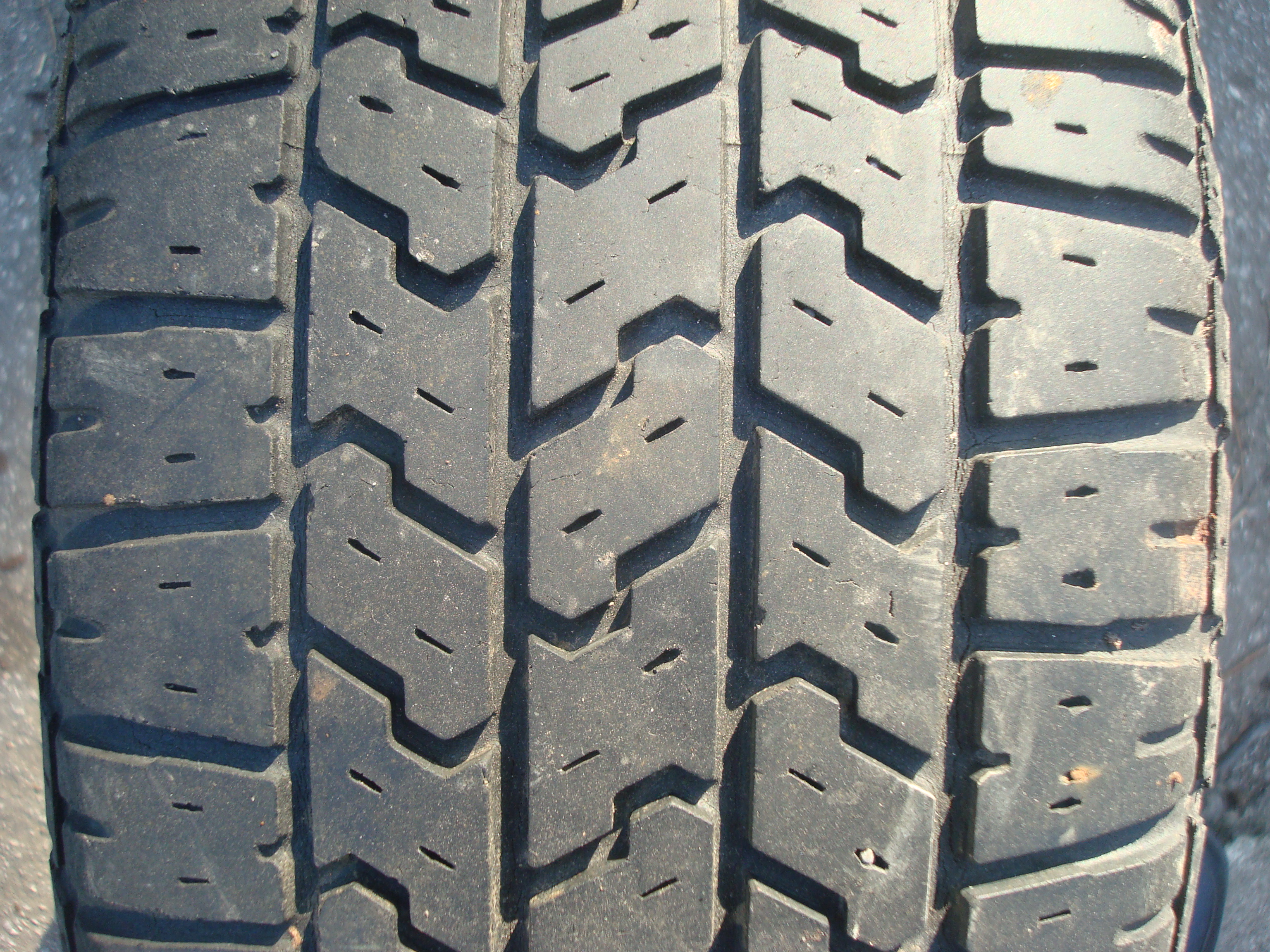
I visited my local tire store/garage and tried to have a conversation with one of these wondrous tires, and the thing–I have no idea if it was male or female–ignored me. How rude!

My disappointment was obvious. The store manager came over to, I believe, console me, and when I told him what I was trying to do, he kind of looked at me sideways. I pointed out that, as a journalist and media critic, it was practically a sworn duty for me to investigate such groundbreaking claims. I even showed him my trusty Livescribe pen and Dot Paper notebook. Even though I was as sincere as a person could be, all I got from him was a belly laugh. Had I not been a long-time customer, I think he would have thought I was loopy, but by now, he knows how I am.

Now, I have no particular prejudice against those writers, even ad writers, who give inanimate objects human-like qualities. I really don’t. I do, however, have a problem when these people who share a corner of my profession create verbal crap viewers and listeners are sure to repeat. As I’ve said before, we in the media are the new language teachers. Whether or not we and they know it, we set the standard for how people in our culture express themselves.

Language is a living thing to be sure. Let’s not make it choke on stupidity.

Write the right words, and make them real

“Oh!  That’s so addicting.”  Actually, annoying is the word that comes to mind when I see or hear addictingAddictiveAddictive is a word.  Addicting is not a word, and it’s a teeny-bopper mistake that I am seeing more frequently from writers who should know better.

How can so many writers not know which words are real?  What’s gotten into everyone?  Should I blame IMing or TwitterFacebook, maybe?  I don’t know, but the problem is everywhere I turn it seems.

Progressive Insurance commercial:  “We’re the only ones that do.”  Ahh!  Only ones who do.  Who, not that.  The word ones refers to living, breathing entities, which should be the first clue to the writer of that particular ad that s/he’s made a mistake.

24:  “…safety deposit box…”  Where’s my pencil?  I need to poke out my eye.  Safe deposit box.  A safe deposit box is a box inside a safe, which is how those particular types of boxes got their names.  (I was a credit union executive before I was a full-time writer.  I think you can take my word on this one).

CNN:  “Impact Your World.”  You’re kidding, right?  The moment that show was advertised, I emailed CNN.  Let’s just think a moment about what ‘impact your world‘ means.  Imagine a world.  Now imagine a huge hand smacking the world.  The smack is the impact.  The hand had an impact on the world.  Impact needs to be followed by ‘on’ or ‘of’ or some other appropriate article to make sense.

When I see impact these days, I see it incorrectly used in place of effect or affect.  This tells me I’m working with either a lazy writer or a writer who want h/her work to sound important.  Impact is one of those words that is crisp to the ear.  Short.  Punchy.  This is why it is so often used in advertising and sales.  It’s one of those words that should tell  listeners (or readers) that they’re being sold something.  Someone wants to convince them of something.  Impact has gone the way of jargon, and should be avoided at (nearly) all costs, save when speaking about teeth.

History Channel:  “The answer lies…”  Oh, god, please, not the History Channel.  I love the History Channel, and the more I watch it, the more I hear this mistake.  “The answer lay…” People lie.  Things lay.  That’s your shortcut for today.  My colleague, Mignon Fogarty can give you some more examples, but for now, just remember:  if it breathes, it lies.

Pick your adQuality. Since when does the word quality not have to be quantified?  When you write, “That’s quality work,” what do you mean?  What kind of quality?  Good?  Bad?  Mediocre?

Badly. I leave you with badly.  When this word started to replace bad, I don’t know; but it has to stop.  When you write “I want it badly,” what you are telling the reader is that you don’t know how to want very well.  The sentence should read, “I want it so much,” or “I want it a whole lot.”  If you can want something badly, you should also be able to want something goodly, and we all know that’s just not an option.

Do you have any pet peeve words or phrases?  Share them here.  If you have a question for me on the editing process or just want to know how you can better please your editor, ask me.  I may be crabby, but I am here to help.

Follow me on Facebook, Twitter1, Twitter2, LinkedIn

XML Google Reader or Homepage
Add to My Yahoo!
Subscribe with Bloglines

Add to My AOL
Add to Technorati Favorites!

Get RSS Buttons

NO PART OF THIS ARTICLE MAY BE REPRODUCED WITHOUT ATTRIBUTION AND LINK-BACK.

Copyright © 2010 Diane Faulkner.  All rights reserved worldwide, including the right of reproduction in whole or in part in any form.

Reproduction or transmission of any part of this work by any means, electronic or mechanical, including photocopying, beyond that permitted by Copyright Law, without the express permission of the author, is prohibited.

Text:  Copyright © 2010 Diane Faulkner.  All rights reserved worldwide.  Crabby Copy Editor™ and related trademarks appearing on this website are the property of Diane Faulkner.

Photo:  Copyright © 2010 Devany Vickery-Davidson.  All rights reserved worldwide.  Used with permission.